Tuesday, June 11, 2013

SPECIAL ALERT! FLORIDA’S NEW FORECLOSURE BILL HB 87 – HOMEOWNER’S AND CONDOMINIUM ASSOCIATION LIEN’S CAN NO LONGER BE FORECLOSED…


United Financial Counselors
A 501(c)3 Not For Profit Organization
www.UnitedCounselors.org


There are so many elements of this bill that will be picked apart, but let’s start with the fact that, according to the explicit definitions of this new law, a condominium or homeowner’s association cannot state a cause of action (or simply cannot foreclose).  

For all those lobbyists that didn’t bother to actually read this bill, let me draw your attention to line 90:

702.015 Elements of complaint;
2) A complaint that seeks to foreclose a mortgage or other lien on residential real property, including individual units of condominiums and cooperatives…MUST:
(a) Contain affirmative allegations expressly made by the plaintiff at the time the proceeding is commenced that the plaintiff is the holder of the original note secured by the  mortgage; or
(b) Allege with specificity the factual basis by which the plaintiff is a person entitled to enforce the note under s. 107 673.3011.

Now, experienced practitioners out there will recognize two things.  First, this new section of statute applies to “other liens” on property, not just mortgages….and condo/hoa liens are “other liens” and next…..
A CONDO OR HOA CANNOT COMPLY WITH EITHER OF THE A OR B “MUST” SECTIONS!

Meaning unless the debt is held by a note they CANNOT foreclose! Looks like the HOA attorneys are going to have a field day with this!


Sunday, June 9, 2013

Watch Out Florida Homeowners: Gov. Scott signs controversial fast-track foreclosure bill into law

United Financial Counselors

A 501(c)3 Not For Profit Organization
Local: 786.288.5320 Toll Free: 877-509-3106 - www.UnitedCounselors.org

Thursday, May 16, 2013

Thank You For Your Support!!!

United Financial Counselors
A 501(c)3 Not-For-Profit Organization
Toll Free: 877-509-3160      Local: 786-288-5320
 
 
By clicking the email you have automatically signed up to receive the United Financial Counselors outreach package! All clicks are tracked. If we have your address on file, your package will be sent by Wednesday May 22nd. If your address is not on file, we will request it within 48 hours!
 
 We hope that you will utilize the contents to help others in need of assistance.
 
We recommend you provide the contents of the package to members of your place of worship, social groups, facebook friends, your next door neighbor, and others that you run into everyday!
 
Thank you again for the opportunity to help you and your family!
 
The United Financial Counselors Team!


Sunday, April 21, 2013

Countrywide Borrowers Settlement - April 26th Deadline


Brought to you by:

United Financial Counselors
A Not For Profit Consumer Advocacy Group
For More Information on Mortgage Modifications, Short Sales & Bankruptcy Relief Visit:
Check Out The Highlighted Areas Below For Key Information

United States vs. Countrywide

HCE Cases black banner


Notification Begins to Borrowers Eligible for Payments from $335 Million Lending Discrimination Settlement Between the Department of Justice and Countrywide Financial Corporation (United States v. Countrywide Financial Corp., et al. (C.D. Cal., December 2011)

          Independent Settlement Administrator Rust Consulting, Inc. on November 16, 2012 began mailing letters to borrowers whom the United States has identified as entitled to payments from the Countrywide lending discrimination settlement fund. The letters notify recipients that they have been identified as victims, list the minimum payments they can receive, and include response forms.


          Borrowers receiving letters must sign and mail their response form by April 26, 2013 to participate in the settlement. The response form is designed to be easy to complete, and it can be returned using the prepaid envelope enclosed with the letter. In mid 2013, the Settlement Administrator plans to mail a letter with the exact payment amount and a release form to those who return the response form. Individuals with questions about the United States v. Countrywide Financial Corporation lending discrimination settlement may contact Rust, in English or Spanish, by telephone at 1-800-843-5148 or by email atinfo@CWFLSettlement.com.

          The $335 million settlement fund being administered by Rust was created as part of resolving the United States' allegations that Countrywide Financial Corporation and its subsidiaries engaged in a widespread pattern or practice of discrimination against more than 200,000 qualified Hispanic and African-American borrowers across the country who received mortgage loans from 2004 through 2008, as well as allegations of discrimination on the basis of marital status by encouraging non-applicant spouses to sign away their rights in jointly-held property when the applicant spouse took out a loan in his or her own name. Letters will go out at a later date to borrowers potentially affected by the alleged marital status discrimination.

          The settlement, which was approved by the U.S. District Court for the Central District of California, provided for an independent settlement administrator (Rust) to contact and distribute compensation payments at no cost to borrowers whom the department identifies as victims of Countrywide's discrimination. Rust's activities are overseen by the Department of Justice, and all of Rust's costs and expenses will be paid by Countrywide.

           A copy of the United States' lending discrimination complaint against Countrywide, the approved settlement order, and additional information about fair lending enforcement by the Department of Justice, can be found on the Department's website at www.justice.gov/fairhousing.

          The letters being mailed out beginning November 16 are the first mailing being sent to victims relating to the Countrywide lending discrimination settlement, although many Countrywide borrowers have previously received legitimate letters relating to other settlements with Countrywide not related to discrimination. Countrywide borrowers should treat with caution any mailings or phone calls that tell borrowers they must pay to participate in the settlement, or contacts that do not come from Rust related to the lending discrimination settlement, as such letters might be part of a scam. All mailings from Rust related to the lending discrimination settlement will have the seal of the United States Department of Justice and use the return address "Countrywide Fair Lending Settlement Administrator, c/o Rust Consulting, PO Box 8048, Faribault, MN 55021," and will ask victims to return response forms to that address. Any potential scams related to the Countrywide lending discrimination settlement should be reported to Rust by telephone at 1-800-843-5148, or to the Department of Justice at 202-514-4713.
          Today's announcement only addresses the Department of Justice's December 2011, $335 million settlement resolving claims that Countrywide discriminated in making loans. It is separate from the March 2012, $25 billion settlement between the Justice Department, the Department of Housing and Urban Development, 49 state attorneys general and the nation's five largest mortgage servicers to address mortgage loan servicing and foreclosure abuses. Individuals can obtain more information about that separate mortgage servicing settlement by visitingwww.nationalmortgagesettlement.com. Countrywide borrowers can contact Bank of America at 1-877-488-7814 to obtain information about loan modifications or other relief that they may qualify for under that separate settlement.

Sunday, April 7, 2013

SWEET JUSTICE!!!! YES!

United Financial Counselors

A Not For Profit Consumer Advocacy Group
www.UnitedCounselors.org

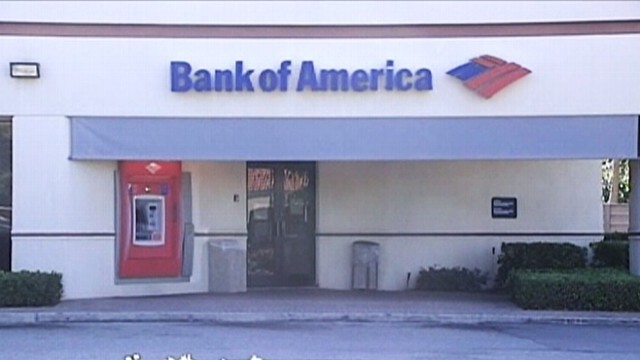
Homeowner Forecloses On Bank Of America

In Florida an angry homeowner whose home was wrongfully foreclosed on by Bank of America gets revenge by foreclosing on the bank's local branch. In Georgia, in a different property dispute, a city court judge threatens to jail the local BofA branch manager for contempt of court.

Any relation between the two incidents? "Just mere coincidences," says bank spokesperson Jumana Bauwens. Still, if you're BofA, you've got to be asking yourself: Where's the loveIn Florida an angry homeowner whose home was wrongfully foreclosed on by Bank of America gets revenge by foreclosing on the bank's local branch. In Georgia, in a different property dispute, a city court judge threatens to jail the local BofA branch manager for contempt of court.

Any relation between the two incidents? "Just mere coincidences," says bank spokesperson Jumana Bauwens. Still, if you're BofA, you've got to be asking yourself: Where's the love?
The Florida incident arose when the bank foreclosed on Warren and Maureen Nyerges of Golden Gate Estates in Naples. This surprised the Nyerges, since they had no mortgage--not with BofA or with anybody else. They had paid cash for their home in 2009.
Warren Nyerges made phone calls to the bank to try to get them to desist. "I talked to branch managers, I called anyone who would listen to me," hetold the Naples News. "I wrote a certified letter to the [bank] president. No response, nothing." Finally he hired an attorney. Two months later, the foreclosure had been dismissed.
Nyerges then sought to recover his attorney's fees, and got a judgment against the bank. Five more months passed: more phone calls, more letters; no payment. Nyerges went back to court and got a writ of execution, which gave him permission to seize bank assets in payment for his judgment.
VIDEO: A Florida family forecloses on Bank of America.
ABCNEWS.com
Video Story
Foreclosure Frustration Leads to Trashed Homes Watch Video
Man Takes His Home Hostage?!?Watch Video
On June 3, Nyerges, two sheriff's deputies and a moving truck showed up at the local BofA branch. The deputies informed the manager that he could either pay the Nyerges' legal fees— $2,500—or the movers would start taking away the bank's furniture and cash. The manager, after conferring with his superiors, gave the deputies a check.
Bank of America later apologized to the Nyerges in writing--but managed to misspell their name.
Their attorney, Todd Allen of Conrad Willkomm, P.A., remains disgruntled: "Bank of America never apologized for having tried to foreclose, only for not paying the money in time."
As to how the situation arose in the first place, Allen says the home's prior owner had defaulted, and that BofA had taken back the house. "My clients purchased the property directly from Bank of America. If they [the bank] had taken 15 minutes to review their records on the property, they would have seen the details of the transaction." In his view the Nyerges' story is "symptomatic of a larger problem: banks just aren't doing their due diligence before they start foreclosings."
His clients, he says, are "ecstatic--but drained emotionally. It's scary to have your home foreclosed on when you've paid cash for it."
Bauwens of Bank of America acknowledges a mistake was made: "Basically, we're truly sorry for the series of unfortunate circumstances that Mr. Nyerges experienced. He received a judgment—and rightly so. On Friday, that judgment was paid."
Still, she says of the incident, "It's not good for business."
Okay, then; on to Riverdale, Georgia, where a Bank of America branch manager is facing jail for contempt of court. "We are in conversations with the City of Riverdale to resolve this matter," says Bauwens, "and hope to do so."
In dispute here is who owns an abandoned home that has become, in the words of Dr. Evelyn Wynn Dixon, Riverdale's mayor, not just an eyesore but a safety hazard. "It needs to be demolished," she says. "It should have been torn down two years ago."

Sunday, March 31, 2013

Think Before Paying Taxes With A Credit Card

United Financial Counselors

A Not For Profit Organization

www.UnitedCounselors.org

As long as the government gets paid in full, it’s not picky about the method. Paper, plastic, even cash if you visit a local office. (Don’t mail cash.) It doesn’t matter to Uncle Sam.


It does matter to you, though. Using a credit card means the usual concern of paying it off quickly or paying high interest rates. But because the IRS uses third-party processing companies, you’re also going to pay an extra 1.88 to 2.35 percent. On a payment of $1,000, that means an extra $19 to $24. If you can afford to pay in full, is the credit card’s convenience worth that extra money?

Most debit cards, on the other hand, get charged a flat fee between $3 and $4. (Even if you owe so little that the percentage option is to your advantage, the minimum fees will guarantee you pay that much anyway.) Be careful with MasterCard debit, though: two of the five vendors charge a percentage fee on those just like credit cards.

If you’re going to pay by credit card, keep in mind your credit utilization ratio – if your monthly statements show you’re using more than about 30 percent of your available credit, your credit score’s going to get dinged until you bring that down. You also want to make sure the payment is treated as a purchase and not a cash advance, which can trigger fees and a higher APR rate.

9 Great Tax Tips


United Financial Counselors
Local: 786-288-5320 or Toll Free: 877-509-3160
 
 
If it’s time for you to get started, here’s some last-minute advice that might help.

1. Contribute to an IRA

One of the few ways you can still lower your 2012 tax bill is contributing to a tax-deductible IRA. You have until April 15 to do it. Contributing has big benefits – a tax deduction, tax-deferred compounding, and the main benefit: survival when you’re retired. The IRS says the max you can contribute for 2012 is $5,000 ($6,000 if you’re 50 or older).

2. Get organized

I once spent three days on the floor of my living room, sorting through a box of crumpled Home Depot receipts because I didn’t organize before I started my taxes. Don’t make my mistake. Get what you need before you sit down, like:
  • W-2′s from your employer
  • 1099-MISC if you’re self-employed
  • 1099-SSA for Social Security benefits
  • 1099-INT and 1099-DIV forms
  • 1099-G for state unemployment comp or state tax refunds
  • 1098-T for paid college tuition
  • Summary of paid real estate taxes
  • Summary of paid health care costs
  • Summary of child care expenses
  • Receipts to back up potential deductions

3. Decide if you’ll get help

Before you spend hours struggling with tax forms, decide if you want to DIY or get help. If you made $51,000 or less last year, you can get free tax help from the IRS VITA program. If you’re 60 or older, you might find free help through the Tax Counseling for the Elderly program. If you don’t qualify for either, you can pick up cheap or free software by checking out vendors on the IRS Free File website.

4. Slow and steady wins the race

Some people thrive on deadlines. Others feel rushed and end up overlooking deductions or making mistakes. If you’re more the rushed type, slow down. Mistakes on taxes can be costly: Enter the wrong info and you could end up paying more than you should, or not getting back all you could. When you’re done, double-check your return before you file.

5. Don’t rush past deductions

Don’t feel tempted to take the standard deduction to save time. Hunt down itemized deductions and see if they’d save versus the standard. Here are the basic standard deduction figures for 2012 from TurboTax:
  • Standard deduction for single taxpayers – $5,950
  • Standard deduction for married taxpayers filing a joint return – $11,900
  • Standard deduction for head of household taxpayers – $8,700
Here are some common deductible expenses you might use to beat the standard deduction:
  • Charitable donations
  • Home mortgage interest and real estate taxes
  • Higher education expenses
  • State and local income taxes
  • Medical expenses (but only what exceeds 7.5 percent of your adjusted gross income)
  • State sales taxes
  • Job-hunting expenses
  • Points paid to refinance a mortgage
6. Go digital
However you choose to do your taxes, be sure to eFile and request direct deposit. If you request direct deposit, the IRS says you’ll get your refund in less than 21 days and you can track the status online. And if you have to pay, you can also pay electronically.
Everyone can file their tax return electronically free through Free File.

7. Prepare for the worst

If you didn’t cheat or make a big mistake, odds are you won’t get audited. But play it safe and make sure you have everything you need if you do get the dreaded IRS letter. Start a file for your 2012 tax return and store anything you might need:
  • Copies of your filed form
  • Statements backing up the deductions you took
  • Copies of receipts

8. Get an extension

If you don’t owe – you’re getting a refund – you don’t have to file an extension, or file by April 15. There’s no deadline when Uncle Sam owes you.
But if you do owe, and can’t get your taxes done by April 15, no sweat. Just file an extension. That will buy you another six months, so your return won’t be due until Oct. 15.
Important: Extensions extend your time to file, not pay. If you’re going to owe, estimate your taxes and send in a check with your extension by April 15.
And if you owe and can’t pay? Send in your form or extension anyway. You’ll be penalized: The failure-to-pay penalty is 0.5 percent of what you owe for every month it’s not paid, with no time limit. So if you owe $5,000, your penalty will be $25 per month. Not fun, but not the end of the world.
The failure-to-file penalty is 10 times worse. The penalty for not filing is 5 percent per month of what you owe, up to 25 percent total. So if you owe $5,000, not filing is going to cost you $250 per month. After five months, you’ll owe the max of $1,250.

Since filling out and filing an extension form only takes a few minutes (you can even file it free electronically with TurboTax’s free extension filer), you’ve got to be either rich, crazy, or both not to.